

I remember the first time I knew the difference between Ireland and the North of Ireland, the memory fragments and reminds me of loss, reminds me of being the first irish speaker in two generations, (thanks online tutoring), how my mouth forms words my grandmother told me her father told her and how every time it feels like a gift, this is for you ruby girl.
It is August, so we will sleep out on the screened-in porch with the cicadas and the screech owls, the two ceiling fans spinning lazily, pushing hot air around; we will toss and turn, and our mother will place ice packs in our pillowcases, and it will be the best and worst summer of our lives. I was six years old the first time I realized that people die the first time here wasnt the here people wanted it to be.
I am hidden under a large wooden table, the plasticky linoleum tiles tacky underneath my bare legs and dirty fingers.
Around me are five pairs of feet, in socks, shoes, and one little pair just as naked as mine. The floor is coated with flour, modeling clay, dog fur, and stickiness from upturned juice cups and sloshed over tea kettles.
Above me, the voices of my family are hushed as my aunt tells the story of how we came to this country. There is a reverence in her voice when she speaks of her daddy’s suitcase and the gaelacht that I will carry around in my chest for the rest of my life. I lay underneath the dinner table until my brother hurried off to bed, and the adults switched from tea to whiskey and wine.
I lay there, staring up at the leaf of this table, wondering how small the table would be if we kept taking grandmothers to the hospital. The old oak clock by the bar chimes too many times, and my mother reaches her hand under the tablecloth, pats my foot, and sends me off to join my brother in bed, so I crawl in my old jumper into the cot on the porch, eyes watching the cross on the wall and the fan spinning in lazy circles.
At a certain point, I began to view my great grandfather’s suitcase as shoved in the back of my brain, where I can hide things, the things I cannot understand. or do not want to.
Before I came to this bed on the screened-in porch or the sticky floor beneath the table, I was even smaller with even larger questions. I was even younger, and all angles and freckles, gap-toothed and self-cut bangs, GAA jerseys and flat bed trucks, I remember being so fearful and yet so much braver then, and I often think of that girl; as I strive to be someone, I ask myself where she went, wonder if she’s stuffed in granddaddy’s suitcase.
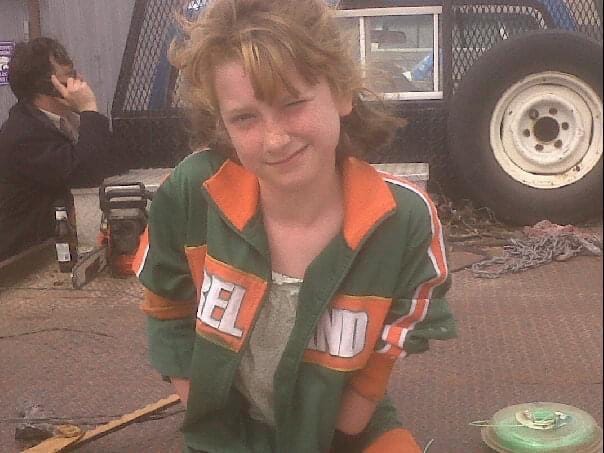
afformentioned GAA Jersey <3
I have always had a near-perfect memory; everything I have said or done rattles behind my eyes when I lay down to sleep, but when I was younger, I was simply young. I didn’t know it was strange to remember things said in passing or memorize the doily-covered Bible in the sitting room on the first read-through.
For me, identity is the well that we circle down into, and memory is the water sloshing over the bucket, the shaking in my chest, and the overwhelming nostalgia as I smell rain or drink cinnamon tea, hear a West Belfast accent or a Saint Barbara medal. The well fills, and the well spills.
When I was younger, I had two and a half grandmothers (Nana, Grandma June, and Joyce) and two grandfathers (Both named John), four out of five on my mother’s side, and nine great aunts and uncles. As a six-year-old, I thought divorce was a means to gain more grandparents; therefore, the kids at school shouldn’t be so worried about their parents.
One of my first clear memories is being chastised by my grandmother for going into the neighbor’s garage; still, to this day, I feel the need to tell her that I wasn’t even in their garage and I was simply in the side yard poking the yardstick that hung on the wall in her garage into what I firmly believed to be a fairy ring.
There are still weak nights I lie awake clutching my Saint Barbara necklace, wondering if I cursed her that day in the mushroom circle, disturbing those she warned me not to disturb. My Nana’s house, with its split levels, carpeted stairs, and cast-iron bedframes, served as the spine to the stories of my youth until I was eight years old when I found myself under that sticky dinner table as her blood filled with more cancer cells than her own. This was before my mother’s brain started to turn on her, and I became fevered with the idea of capturing my youth and how I came to be here.
As she forgets the little things, I race to write them down, tangibly, somewhere safe. Somewhere permanent.
So much of my memory is grounded in physical spaces, the places I was in, the smells and sounds that make up the home; I found out what death was on a bike in Oskaloosa, the air around me hot and wet like a damp towel over my nose.
My tiny hamster was stuffed into the pocket of my dungarees, and he had a name something like Marshmallow or Oreo or Joan (we had several hamsters & with three children; the names were convoluted at best), his whiskers stuck up like an avant-garde boutonniere as I peddled, and pushed my way down the two blocks between my home and the nursing home my father’s mother was in. The one with the massive oak tree outside her tiny kitchenette-style apartment. The one that smelled like Vicks and tropical island air freshening spray every day, no matter the season.
There was an exhilaration in taking the hamster for a walk that was only partly because I knew I shouldn’t be doing it; mostly, I wanted to make her laugh and make her like me. Until she told me, I could’ve killed him.
Death isn’t scary before you know it; it isn’t real until you see it, and it wasn’t real until I thought I could cause it. After that, it was everywhere: at the doctor, where they paneled me for all the cancers floating around the family, across from the park in the catholic cemetery where I walk now firmly believing it has the prettier graves, standing at the foot of my bed while I slept, and in my grandmother.
June suffered from a rare kind of cancer called Neurofibromatosis type 2, or NF2, in which everywhere you have a nerve ending from the spine to your skin, a tumor appears on the outside of your body, face, arms, hands, everywhere. When I was younger, she would laugh and call it the ‘fun kind’ of cancer.
As a kid, I thought nothing of it; she was mine, bumpy, soft, and usually kind, and I loved her. But she was lonely. Her sisters were far away, her husband abandoned her, and her best friend, an eight-year-old, wanted too much sugar in her tea. I often imagine her loneliness as embodied in a moment from when I was younger.
Grandma and I would sit in my Red Radio Flyer, me in the front with her arm wrapped around me, her other arm holding the porch handle as we sat at the top of our steep floodplain driveway. She would count down, squeeze me once, say grá mor and then let go. And we were soaring and alone as we flew down, afraid together, chest-deep laughter echoing around the prefab neighborhood as we rolled to a stop in the neighbor's walkway.
My memory stops time as we crest the driveways, and the wagon hits a flat part of the pavement. We are airborne for a moment, giggling. She grips me to her chest like a vice, my safety first. And we flew. It didn’t matter that it was unsafe, her brain was broken and bumpy, or that my parents hated it; it was ours, and the more I know about her, the more her recklessness reminds me of softness in her own way.
As an adult, I am sadly resigned to understanding why I only have two photos of her from far before the outside tumors showed up. In one of the only photos, of her later life that I have seen of her, she is making snake bread, something that her sister- my great aunt- would often take me to the supermarket in Chesterfield to get loaves of on the day before the St. Patrick’s Day parade, a simple recipe but a painful one after her passing, so we tend to buy it now. In the photo, she is at a counter that I do not recognize, but I think it is Grandma Ruby’s house. She smiles; her hands are dusted with flour and tinged green with food coloring. Her short brown hair curls at the temples, like little devil horns.
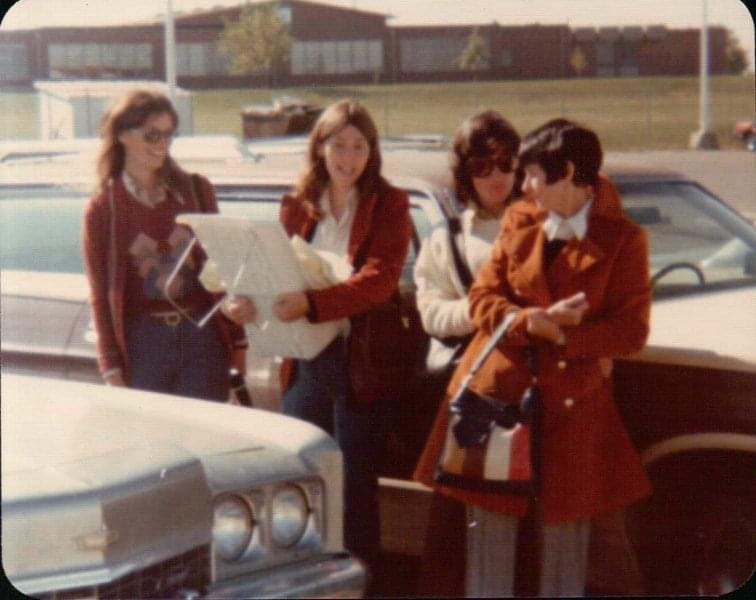
4/5 Aunts <3
My great aunt Cathy is in the corner of the kitchen, cut off by the camera lens, laughing. Even though this is not my memory of her, it is one that I cherish, and keep close to me, knowing that there were moments in her life after her diagnosis when she was happy enough to humor the photograph, so that we may remember that we have the same smile. I know her more now.
And I know death, too.
For a very long time, I was convinced I was a harbinger of death. I had a dream my grandmother would die the night before it happened. The winter before she passed, I remember waking up with knife marks on my wall that I still haven’t determined where they came from.
Logically it had to be my older sister, but my sister blamed my grandma, my grandma couldn’t even make it up the stairs to my bedroom, and I? became terrified that I was to be the victim of a steak knife-wielding murderer. So, I began sleeping with the dog in my bed, even when my grandmother was taken back to the hospital. The cancer she had my entire life, or the ‘fun kind’ as she called it, wasn’t what was killing her. No, she managed to develop breast cancer as well.
In my limited memory of my time as a seven-year-old, I remember it taking her quickly, maybe a few months to a year. I remember the night before. It was storming heavily, a late spring storm that shakes the windows and is said to bring May flowers. The thunder boomed so loud it woke the dog and me up, my head colliding with her open jaw, leaving me with a scar cresting my forehead right above my hairline.
But I was already crying when I woke up. I had dreamt that Grandma had died, and by morning we got the call from the Baldwin Care & Rehab Center, June Elaine Ruby had passed.
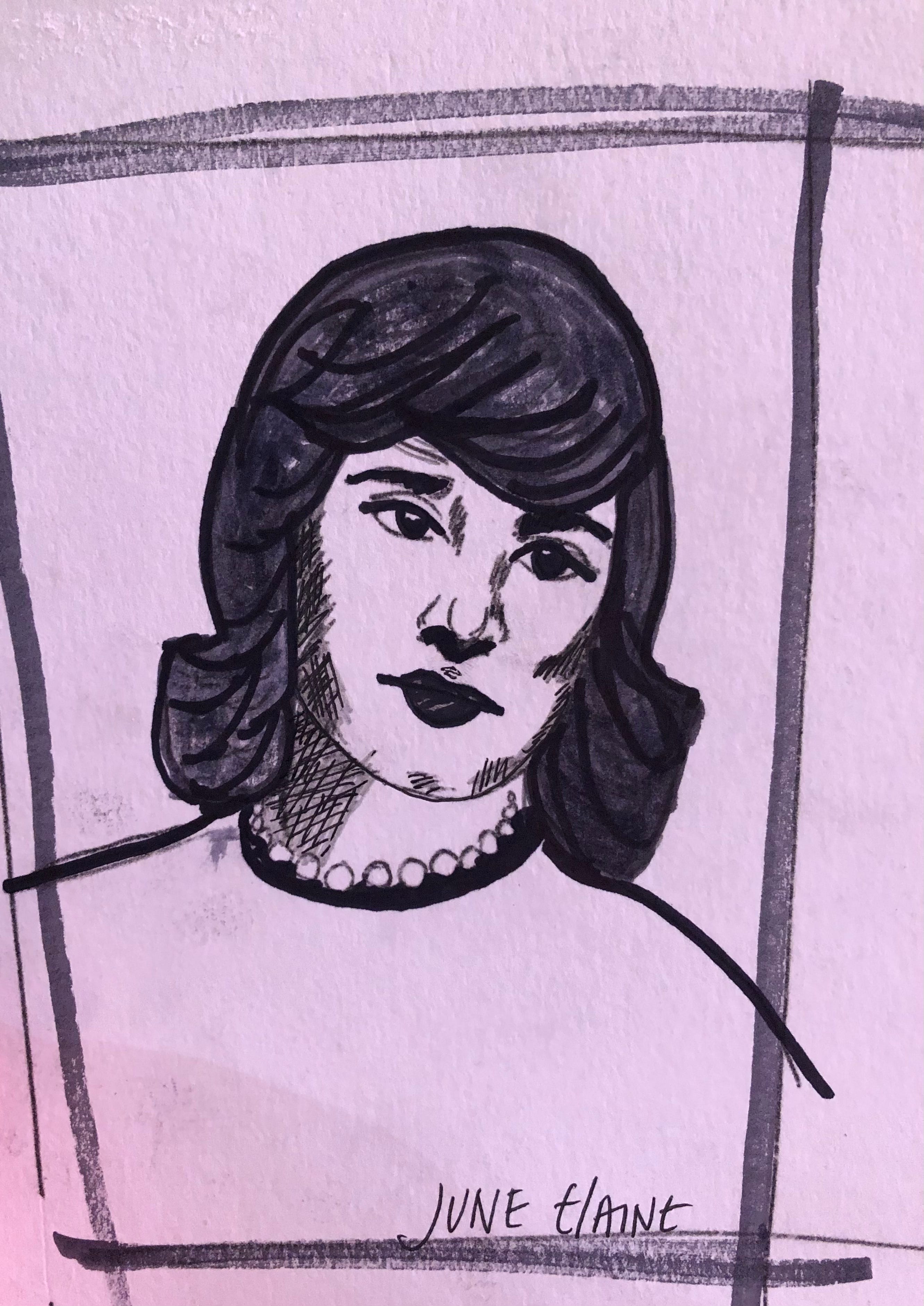
Grá Mor.
Wow! So moving 💗